August 26, 2025
By Lane Kimble
SHEBOYGAN COUNTY — The fresh asphalt radiated heat, temping at more than 200 degrees moments after the paver rolled by.
State Sen. Devin LeMahieu bent down and gently placed his palm on the surface.
“I’ve been to different projects, operated a backhoe at the Operating Engineers training center, which was really cool, but I think that’s the closest I’ve ever been to asphalt being laid,” LeMahieu said. “It’s always good to see a different aspect of infrastructure.”
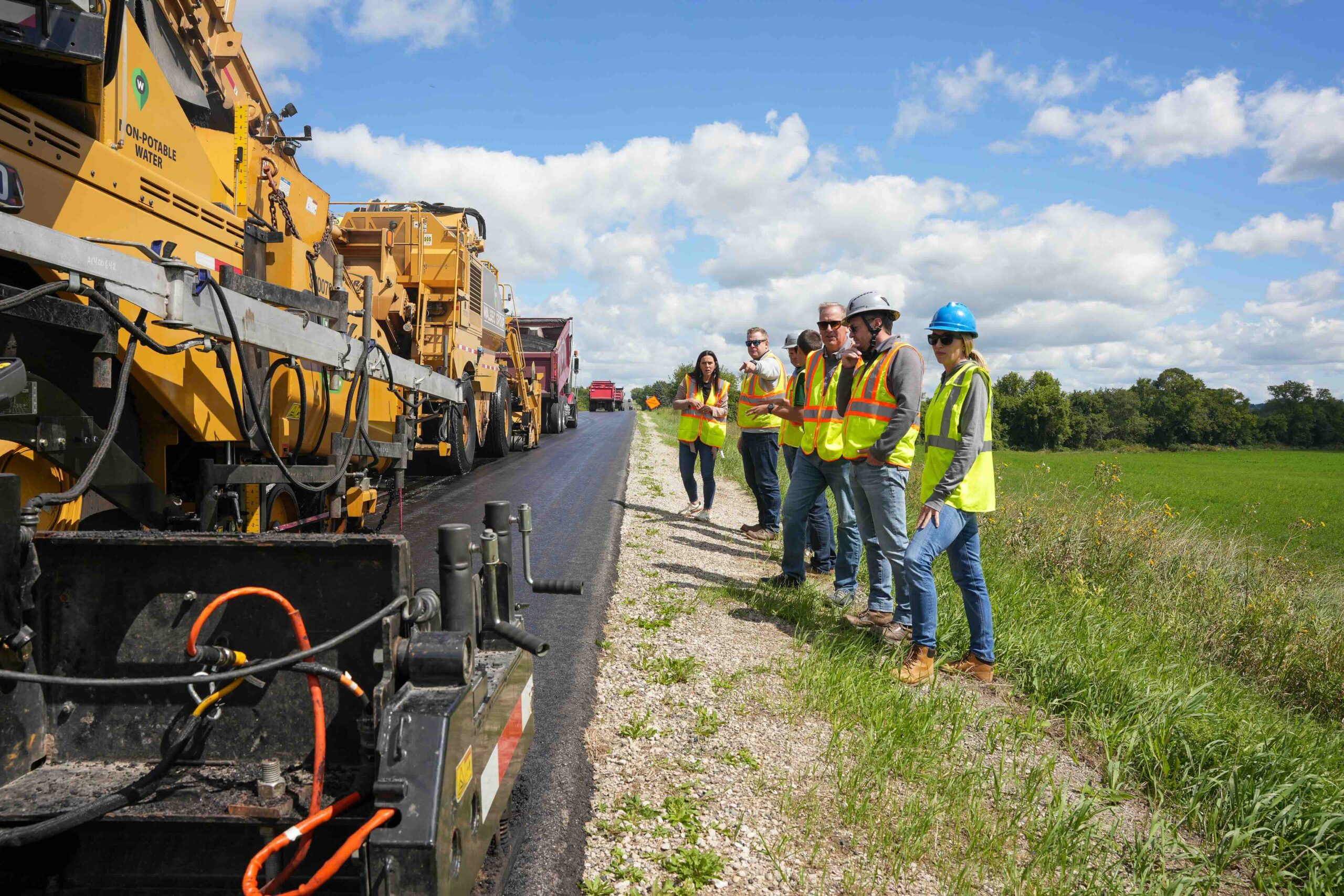
The Senate Majority Leader and his colleague, State Rep. Lindee Brill, certainly did Monday morning. They toured Northeast Asphalt’s 13-mile repaving job on Highway 28 in Sheboygan County, standing just feet from the heavy equipment and workers.
The group–coordinated by WTBA of Tomorrow–covered topics like longitudinal joints, paving on echelon, smoothness testing, and work zone safety. Then came the opportunity to climb up onto that actual paver.
“It was neat,” Rep. Brill said of sitting in the driver’s seat.
“To look across at the guy who was driving it and think that’s what he does every day to make sure we have good roads, it just gave me gratitude for everyone.”
But you can’t fully appreciate paving a road without seeing where it begins. That’s why NEA Project Manager Josh Treml and Area Manager Taylor Tauer started the tour a few miles away, at the Michels Beechwood aggregate site.
“A lot of people see the finished product out the road, but they don’t see the things behind the scenes,” Treml said. “It’s essential to have sites like these. Without these we couldn’t do anything out on the road. We need the materials, we need the spot to put our asphalt plant.”
The plant can churn out 400 tons of fresh asphalt each hour, helping road builders lay about 70,000 tons on the Highway 28 project. There were a few science lessons shared and core samples passed around before heading to the roadway itself.
While the group made sure the lawmakers understood the cost-saving benefits of strong partnerships between WTBA member companies, Treml also touched on the other symbiotic relationship at hand: there’s no road work without strong support for transportation in the state legislature.
“That’s our lifeline. That’s how we live and feed our families,” Treml said. “We want to do our part to make the dollars go as far as possible to provide the best product we can at the most economical rate, but we need them to secure that funding.”