July 15, 2026
By Lane Kimble
Data is in for about half of WisDOT’s Work Zone Safety Pilot program projects as we hit the halfway point of the construction season.
The department now aims to collect metrics from its full assortment of projects, begin analyzing that data, and set up project completion interviews with contractors and their teams.
WisDOT’s Statewide Work Zone Operations Engineer Erin Schwark provided that update during the quarterly Work Zone Safety Task Force meeting Tuesday.
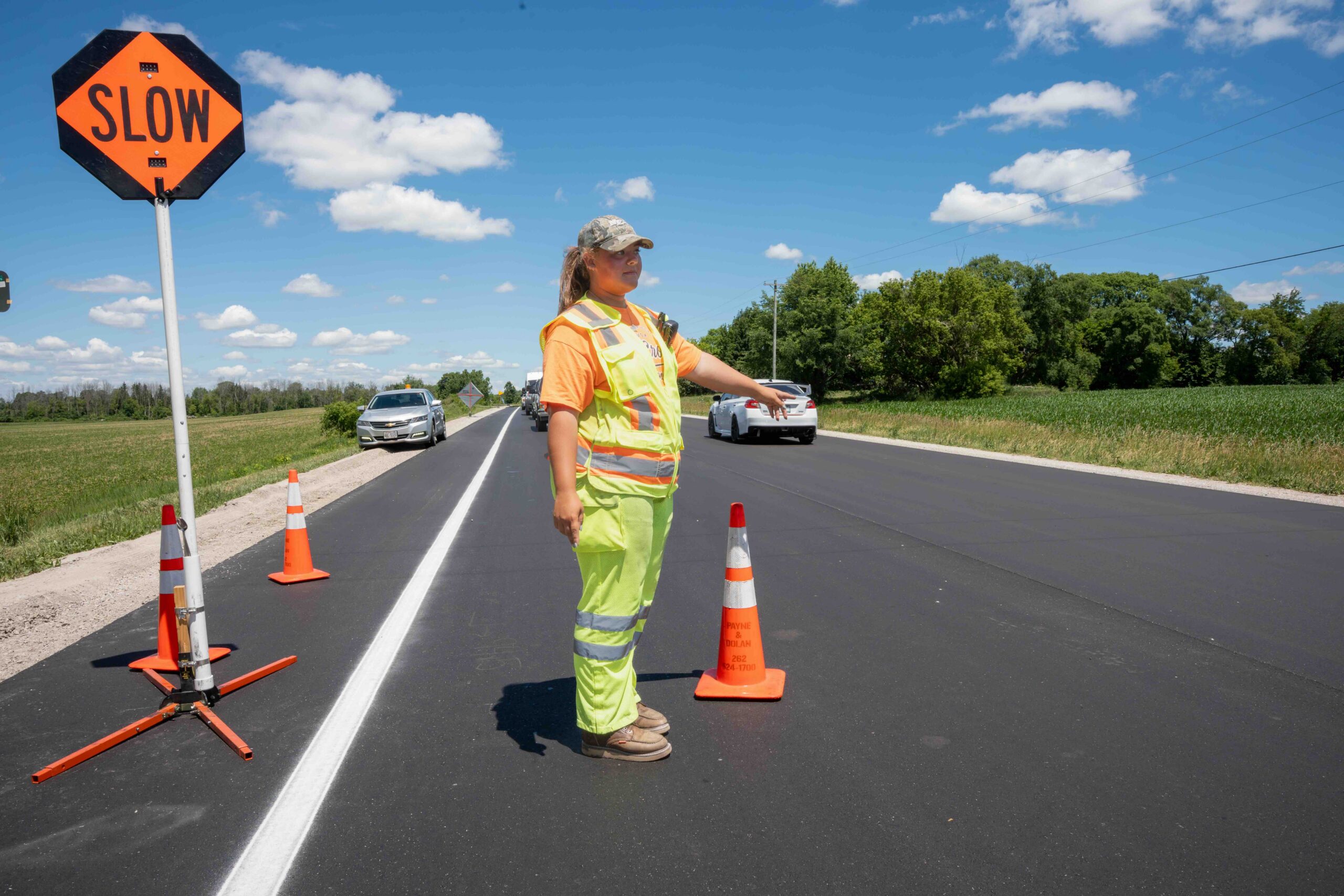
The study is looking at 10 two-lane projects across the state, experimenting with various additional traffic safety measures ranging from speed feedback trailers to automated flagger devices, connected work zone technology, and police presence. WTBA encouraged lawmakers to include $600,000 for the study in the most recent state budget.
Director of Communications Lane Kimble toured one of the pilots with WisDOT leadership in New Holstein last month.
Tech Demonstrations
The Task Force also reviewed progress on updating the Wisconsin Flagger Handbook (which was last done in 2020), heard a progress report on a WTBA-led flagger training video which is in production, and looked at two new technologies which could improve safety in busy project sites.
Mobile Barriers Chairman and CEO Kevin Groeneweg demonstrated his company’s portable barrier wall.
A semi-tractor pulls the five-foot-tall wall to a specific work area and offers crash protection that can be set up and taken down quickly. Mobile Barriers are customizable in size and length, offering an alternative to closing down multiple highway lanes or relying solely on Truck Mounted Attenuators to protect crews from traffic.
The trailer can be especially useful on bridges or when doing tunnel work, where space is at a premium.
“It’s highly mobile and very strong,” Groeneweg told the group. “It’s built to take a hit.”
WisDOT staff checked out Mobile Barriers in-person on the Illinois Tollway in 2022 and is considering including it in the specs of an upcoming Wisconsin road project.
The Task Force also looked at a wearable alert system called Road Defender.
Portable cameras and transmitters track traffic patterns and speeds, then relay emergency information to road workers wearing smart watches. The watches alert crews to possible emergencies coming up behind them, giving them extra time to get themselves or others out of the way.
In addition to Kimble, WTBA’s Director of Engineering Matt Grove and Director of Government Affairs Elise Nelson sit on the 50-plus-member Task Force.
The group formed in 2023 and meets three to four times per year.