July 24, 2026
By Lane Kimble
WISCONSIN RAPIDS — The orange barrels blocking off one lane in each direction along Highway 54 already sit very close to traffic.
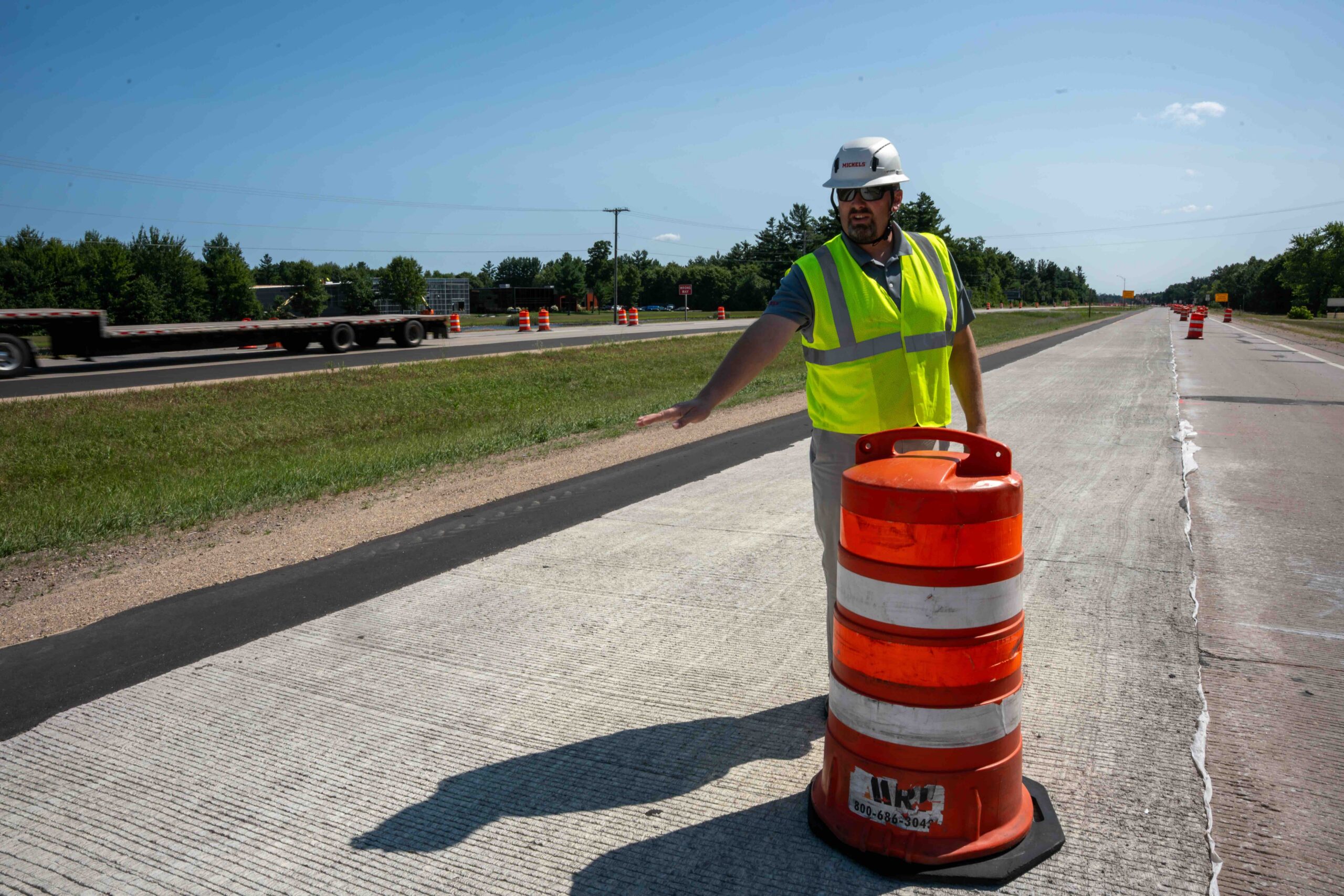
Tony Straseske picked one up and moved it even closer.
“That’s where it needs to be when we’re patching here,” Straseske explained, placing the barrel about a foot over the centerline into the open lane.
As cars and semis headed east out of Wisconsin Rapids at 55 MPH–just inches from where we were standing–the Michels Road & Stone Senior Project Manager said signs, barricades, and barrels can only do so much to protect his crews.
“You get real busy and you can lose track of exactly where you are in the work zone,” Straseske said. “You might get a little too close to traffic, so there’s probably a factor of luck involved (beyond plans and preparation).”
Michels’ concrete patching and shoulder repair job on the 13 miles of state highway linking Rapids to Plover served as a good place to show media and WTBA the risks crews face on a daily basis.
The North Central Region held a walk-and-talk tour Thursday for its turn at season-long work zone safety awareness events this summer.
It’s a different atmosphere than the incredibly loud and busy freeway jobs, but one that can be even riskier, lacking the space for barrier walls and other protections for workers.
“You might see people right up against the drums,” NC Region Supervisor Adam Osypowski said. “There’s usually one person working along that centerline spread down with his butt (facing) backward that’s going to be right between those drums. That’s all the room we have to work.”
Thankfully, there haven’t been any crashes due to construction since work began here in April.
Still, the risk is apparent. Seven people died and more than 600 were injured in more than 2,000 work zone crashes in Wisconsin last year.
“Those crashes, they’re life-changing and life-altering for the workers that are involved, for you as the motorist,” State Patrol Lt. Bryan Wrycha said. “The ramifications are far beyond the day of the crash and the lives you affect. As a motorist, you owe the workers out here that responsibility to pay attention.”
Straseske says he appreciates the concerted effort between WisDOT, WTBA and their partners to expand safety messaging beyond the national kickoff week in April, but he doesn’t feel like driver behavior has improved much in the past four years.
He’d like to see stricter laws that go beyond increased fines for work zone crashes, possibly even requiring jail or prison time for hitting a worker.
Straseske thinks that form of punishment would hit especially close to home.
“If you’re the person that gets run over, what would your family say about it?” Straseske said.