April 30, 2026
By Lane Kimble
TOMAH — The Cranberry Interchange gets its nickname from the vast array of surrounding marshes that grow the tart fruit, but there’s nothing bogged down about this construction site.
Crews are rapidly replacing two bridges, ramps, and improving stretches of freeway where I-90 and I-94 split.
“It’s an accelerated program to get to today’s date,” Hoffman Construction’s VP of Estimating Brad Eberhardt explained.
You can say that again.
Hoffman bid on the project in late June 2025, when concepts were only about 30 percent complete. Less than a year later, they expect to be finished with the project before Memorial Day.
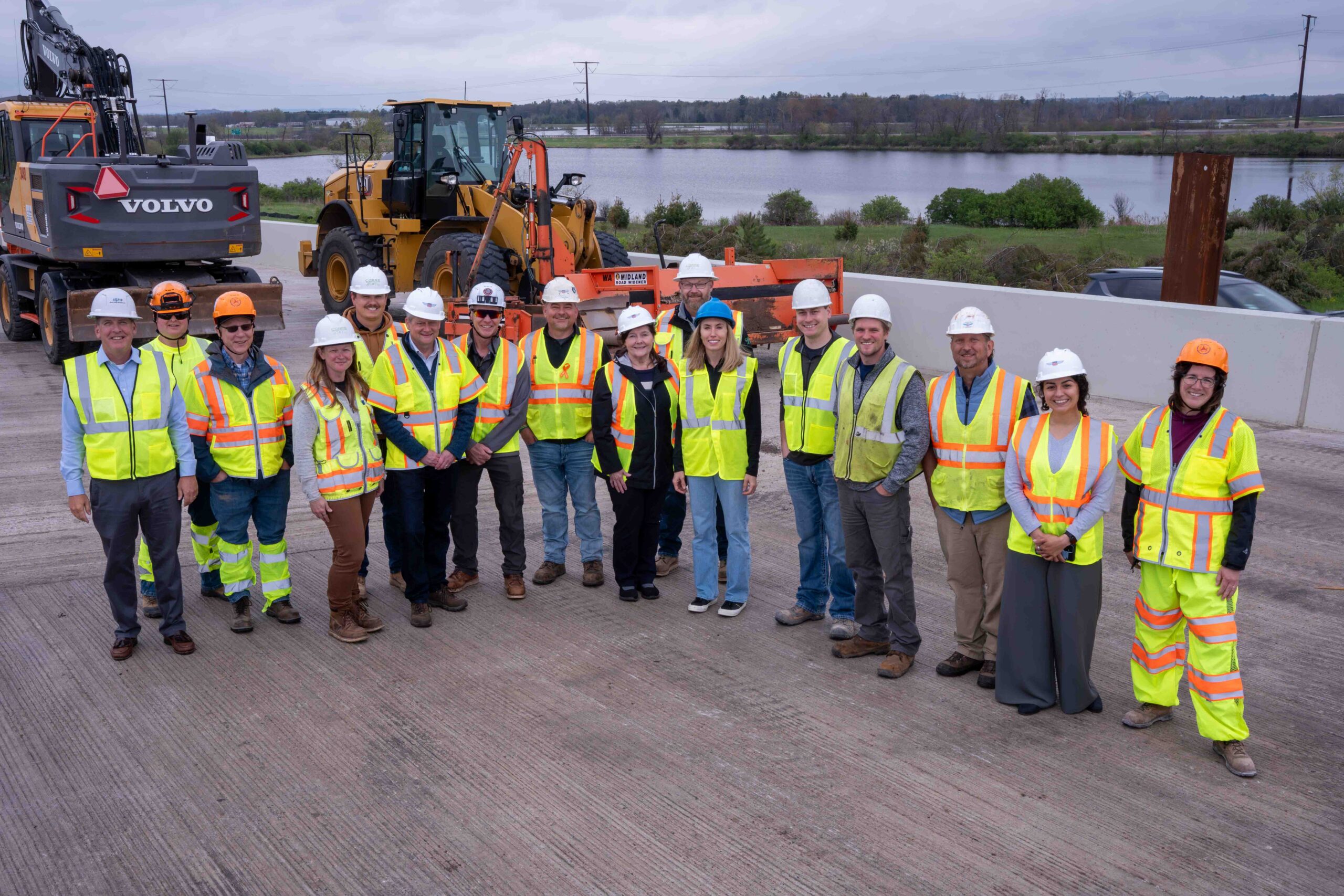
Monday, State Rep. Nancy VanderMeer connected with the contractors and engineers responsible for the expedited work as part of WTBA’s first member site tour of the 2026 season.
VanderMeer (R-Tomah) is the chair of the Assembly Committee on Transportation.
“This project really stood out to us (for Design-Build),” WisDOT Alternative Contracts Engineer Christine Krall said during an initial discussion at CORRE, Inc in Tomah. “They came up with much more innovation with how they were doing the schedule, so we really got to see the benefits of that come through.”
The interchange is one of WisDOT’s final pilot projects before the state begins using a new permanent Design-Build program, which was included in the 2025 state budget.
WTBA worked for years with industry partners to get the bill across the finish line.
Instead of the traditional approach where contractors bid on a fully designed project as is, Hoffman (alongside engineering firms SRF Consulting, AECOM and American Engineering & Testing), took WisDOT’s schematics and offered alternative approaches. They also coordinated with sub-contractor Sheet Piling Services on how to best build the bridges.
The finalized plan, now under the watchful eye of CORRE, saved over an acre of wetlands, minimized traffic impacts, and improved safety, all while cutting about 300 calendar days from the project schedule.
“It gives the contractor and the designer the chance to go back and forth and essentially give the taxpayer the most bargain for their dollar,” SPS Project Supervisor Joel Anderson said.
That frequent brainstorming and strategizing should continue to grow and blossom all across Wisconsin. The permanent Design-Build program allows WisDOT to use up to $300 million every budget cycle on alternative delivery projects like the Cranberry Interchange.
“We talk about saving money and saving time, but the thing we have not done is lost quality,” Krall told VanderMeer. “We’re doing things quicker and faster, we’re showing innovation, but the quality is there or even better.”