June 24, 2026
By Lane Kimble
NEW HOLSTEIN — It looks simple enough.
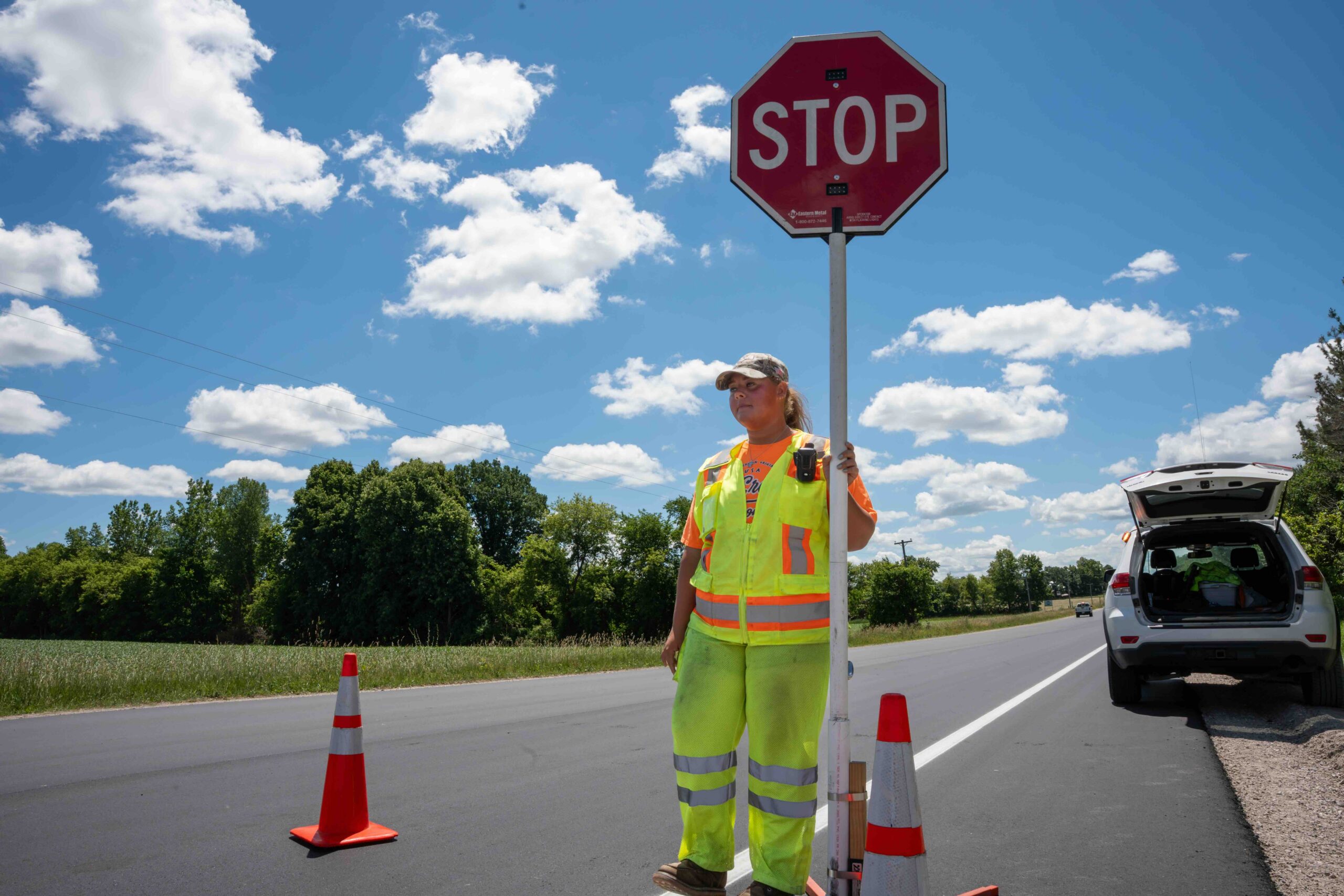
Line up cars behind a stop sign, radio back and forth with someone on the opposite end of the work zone, and turn that sign to “slow” once it’s safe to let traffic flow in your direction.
But make no mistake: flaggers face plenty of pressure.
“I don’t think people realize when they drive by, but that is probably one of the hardest jobs to do out here,” Northeast Asphalt Project Manager Josh Treml explained. “They’re really one of the front lines of protecting people in the work zones.”
There was some added pressure to that job Tuesday morning along State Highway 32 in Calumet County.
Representatives from WisDOT’s Central Office and the Northeast Region visited the NEA repaving project to see how the state’s new flagger safety pilot study is actually working.
“I think the foreman feels a lot of pressure to make sure he’s got everything set up just perfectly, which we try to do everyday obviously, but with a lot more eyes on the job they definitely want to be putting their best foot forward,” Treml told WTBA.
The Highway 32 job is researching how a speed feedback trailer placed a little before cars reach the flagger affects driver behavior.
It’s one of 10 pilot projects across the state this season experimenting with various additional traffic safety measures, ranging from speed feedback trailers to automated flagger devices, connected work zone technology, and police presence. WTBA encouraged lawmakers to include $600,000 for the study in the most recent state budget.
WisDOT Division of Transportation System Development Administrator Rebecca Burkel says it was great to see the safety measures in action, but even more important to talk with Treml and project engineers about what’s actually effective.
Of no surprise to her: crews said nothing works better than county deputies and State Patrol squads to get people to slow down and pay attention.
“That synergy really does help us move forward faster on really looking at what techniques work out in moving operations, out in static operations, and in different situations,” Burkel said. “We need us working together to get that information.”
WisDOT will analyze data, video, anecdotes, and weekly reports from contractors to generate a report on the flagger pilot study this fall and present that report to the Legislature in 2027.
Burkel doesn’t want to wait until the report is finalized, though, to take good ideas from this summer and add them to projects ASAP. That’s encouraging to Treml, who believes a fairly simple study today means a safer work zone tomorrow.
“At Northeast Asphalt, we’re willing to do anything that’ll keep our workers safer,” Treml said. “Things have to be tried and new ideas have to be brought forward to make changes.”