November 20, 2026
By Lane Kimble
WisDOT wants a three-pronged attack to close a more than $1 billion transportation revenue shortfall in the upcoming state budget.
The department is asking to create a retail delivery fee (think Amazon), a “highway use fee” on new vehicle sales, and a regular annual transfer of sales tax revenue from automotive parts to the Transportation Fund.
Combined, the new fees would generate $1.16 billion over the next two fiscal years according to WisDOT’s updated budget request. The department filed the new request Nov. 13 with the Department of Administration.
“[These are] sustainable funding solutions that have been enacted and tested in other states,” WisDOT Secretary Kristina Boardman wrote in the request‘s cover letter.
“We are confident these solutions will position the state to not only meet the well documented transportation needs today, but provide the ongoing funds needed to confidently plan responsible transportation solutions for the future.”
The retail delivery fee would collect $0.50 per shopping orders costing less than $100 and $1.00 per orders costing $100 and more. WisDOT’s projections estimate that fee alone would generate $411 million over the two-year budget.
The “highway use fee” would collect 2.5% of the purchase price on new vehicles bought and titled in Wisconsin. Agriculture, government, “human services,” and driver’s education vehicles would be exempt. The new fee would boost revenue by $492.5 million over the two years.
Transferring 10% of sales taxes collected from car parts, tires, and maintenance to the Transportation Fund would generate an estimated $263 million over two years.
The revenue boosters would allow WisDOT to keep Majors and Southeast Mega projects on schedule while not having to cut back on state highway rehab and maintenance.
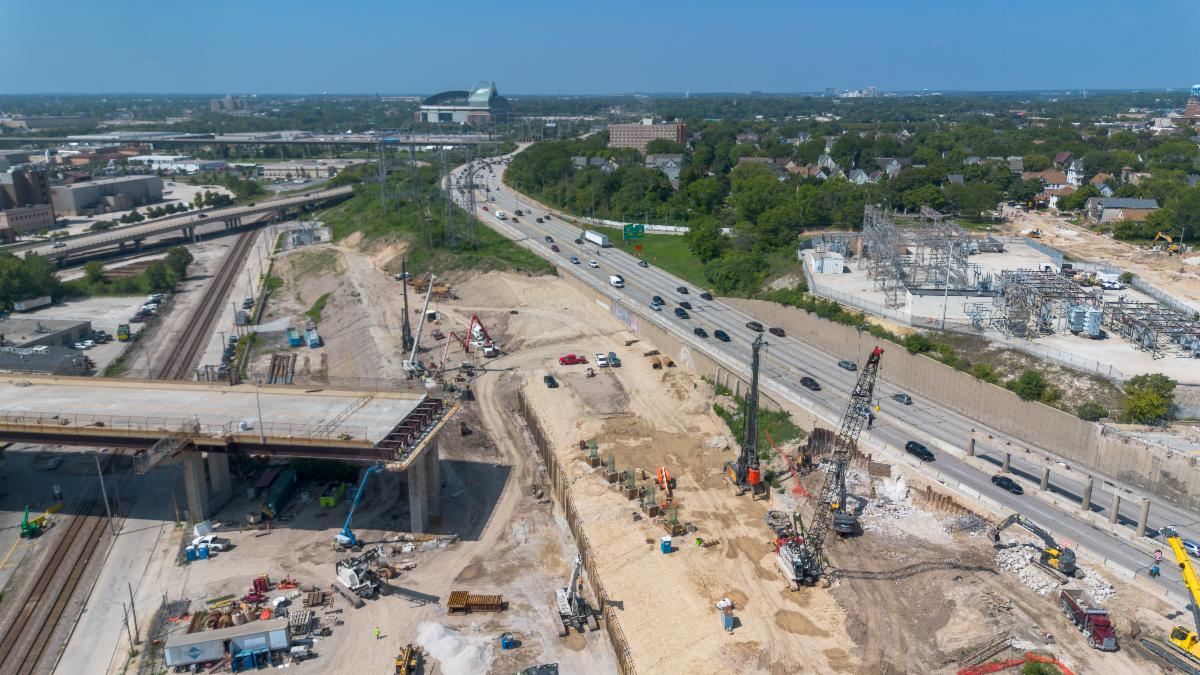
Notably, the budget request calls for $615 million for the I-94 East-West expansion in Milwaukee, with a vast majority of that ($496 million) coming from government bonds. The state’s General Fund can be used to pay those bonds back.
Earlier this year, WisDOT warned state leaders it would have to extend the East-West project by two years (to 2035) if funding couldn’t be moved up into the 2027-29 state budget due to utility relocation delays and conflicts with project overlap.
With the additional funding, WisDOT would:
- Move up the Eastbound Stadium Interchange let into FY2028
- Keep the East Leg let in FY2029
- Combine the Stadium Interchange and Highway 175 projects into a single let in FY2030
WisDOT’s request also calls for a $236 million increase in funding for the Majors program, a $107.5 million boost for State Highway Rehab, a combined $95 million over two years for the Local Roads Improvement Program-Supplemental (LRIP-S) funding, and $70 million for the Agricultural Roads Improvement Program (ARIP) in 2028.
The budget does not address ARIP funding for FY2029.
Gov.-elect David Crowley and his staff will use agency requests to craft his own budget proposal. The governor typically shares his budget plans at the end of February, after which lawmakers (especially the Joint Committee on Finance) begin their work.
Republicans typically took Gov. Tony Evers’ budgets and started from scratch when they were in control, but that process could change in 2027 as Democrats will have advantages in the Assembly and Senate.
WTBA and its partners are keeping a close watch on the budget process and will keep members up-to-date as it plays out. The fiscal year ends June 30.